Despite its small size, Denmark is known for punching far above its weight in terms of innovation and growing businesses. One of the keys to this success has been the suppor
Get introduced to the new government initiative promoting Denmark’s world-class tech ecosystem!
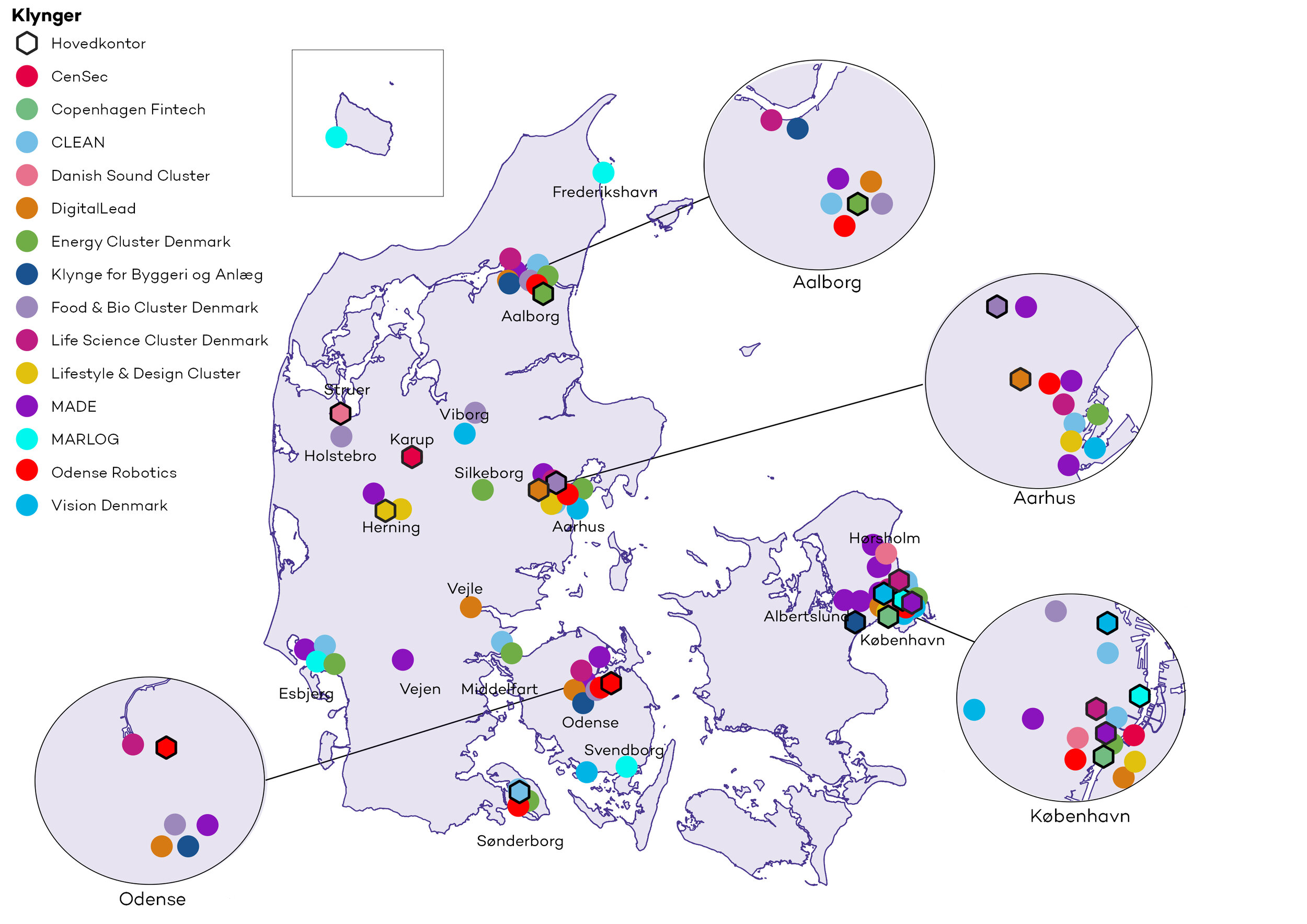
Source: Danish Ministry of Research and Education
Despite its small size, Denmark is known for punching far above its weight in terms of innovation and growing businesses. One of the keys to this success has been the support for tech startups from the Danish government, and organizations like Industriens Fond (The Danish Industry Foundation). Recently, the Danish government has announced a new project that will aggregate many smaller business and research areas into 14 new clusters based around different industrial and technological sectors.
In a recent press release, Danish ministers expressed their vision and optimism about what these clusters will mean for Denmark’s place on the world stage in terms of innovation and technology. (Note: The full press release and original quotes in Danish can be seen here.)
Minister of Education and Research Ane Halsboe-Jørgensen notes that “We have a strong business community throughout Denmark. The new clusters will help to support this by forming a bridge between research environments and companies.” She also expressed the importance of spreading the clusters throughout Denmark, adding that “For the government, it has been very important that there is a geographical balance in the map of Denmark drawn with the clusters.”

The importance that Halsboe-Jørgensen places on a geographical balance in the clusters is realized in the overall map (also shown above), which includes seven clusters spread throughout Jutland, one in Odense, and six in the Copenhagen area. Minister of Trade and Industry Simon Kollerup adds, “Companies rely on the latest knowledge. Therefore, the government has a clear ambition to move the business community and researchers closer together. So I am glad that the new clusters in their distribution bind Denmark better together.” This spread of clusters helps to develop Denmark as an innovation-focused nation, rather than concentrating all of the activity in one area.
The industries of these clusters include robotics, space travel, maritime technologies, finance, and more. Some clusters are more well-established, while others are relatively new and have been designated as “burgeoning” sectors, which essentially means that these clusters are expanding rapidly, with room for further growth. This mix of established and burgeoning clusters means that Denmark can build out a well-rounded tech ecosystem that operates in many different sectors. Learn more about the 14 new clusters below, translated from the Danish Ministry of Education and Research. The original overview (in Danish) can be found here.
- CLEAN – Denmark’s Environmental Technology Cluster:
The cluster for environmental technology (sometimes called GreenTech) covers solutions within water, air and soil treatment, water supply, wastewater, chemical substitutes, waste management, circular economy, climate adaptation, resource efficiency, process optimization of waste reduction, and new waste reduction— just to name a few.
- Energy Cluster Denmark:
This cluster covers technologies related to energy production and to energy-efficient solutions in a business context. The area includes industries and value chains within energy production, infrastructure, storage, transport, conversion, planning, energy efficient technologies, electrification, sector switching, design, consulting and integration of systems.
- Lifestyle & Design Cluster:
The cluster is dedicated to innovation in design, fashion and furniture, and covers design companies that work with graphic and visual design, product design and housing and clothing companies. This includes design and production of furniture, interiors, textiles, fashion goods, etc.
- DigitalLead:
This cluster covers IT companies that develop software and IT-related products and services in areas such as artificial intelligence, machine learning, computer technology, digital communication, big data, blockchain, data analysis and the Internet of Things.
- The Cluster for Construction:
The business and technology area Construction and Civil Engineering covers the entire value chain in the area, which includes buildings, architects, consulting companies and building materials. The construction area primarily covers transport infrastructure as well as its operation and maintenance.
- Food & Bio Cluster Denmark:
This cluster covers the supply and value chain from primary production to processing, and distribution of food to value creation via biological residual and tributary streams, as well as development of climate-friendly alternatives within biogas, materials, chemicals and livestock feed.
- Maritime & Logistics Innovation Denmark (MARLOG):
This cluster covers the entire value chain from production and development of equipment and technology to management, service and logistics from global sender to recipient. It includes maritime transport, end-to-end logistics solutions across land, water, and air, as well as related freight and passenger transport areas with relevant needs and potentials for development and innovation.
- Life Science Cluster Denmark:
This cluster covers both life science and welfare technologies. This includes the entire value chain within pharmaceuticals and biotechnological preparations and medical products. Welfare technology includes technical and digital aids and solutions that work with groups such as the elderly, and other populations vulnerable to a wide variety of health and social issues
- The Cluster for Advanced Production (MADE):
This cluster covers value chains within the manufacturing industry, production companies, and automation technologies. A significant sub-segment consists of companies in machine manufacturing. The cluster effort will strengthen digital production and the use of new advanced materials through collaboration between production companies and Danish research environments within materials technology.
- Copenhagen FinTech:
This cluster covers banking, investment, insurance, pensions and other financial activities, where digital technologies stimulate innovation within e.g. payment solutions, financial management and various personal services.
- Odense Robotics – Denmark’s cluster for robot and drone technology:
This cluster covers the development and production of technologies that aim to streamline and increase production across industries. The area includes, for example, surveillance drones, cooperative robots, and semi-autonomous systems. The area has been designated by the Danish Business Promotion Board as a fast-growing sector.
- Vision Denmark – the cluster for the digital visual industry:
This cluster covers the companies that work with all or parts of the value chain within the production of animation, games, films, television, advertising, and interactive technologies as well as distribution via licensing, publishing, and streaming. The area has been designated by the Danish Business Promotion Board as a fast-growing sector.
- CenSec – cluster for defense, space and security:
This cluster covers defense, space and security. CenSec (Center for the Security Industry in Denmark) is a cluster organization for small and medium-sized companies that, in collaboration with leading Danish knowledge institutions, are or want to become suppliers to the Danish and international defense, space and security industry. This cluster has been designated by the Minister of Education and Research as a fast-growing sector.
- Danish Sound Cluster:
This cluster effort focuses on four areas: Healthcare & welfare, environmental sound solutions, creative sound solutions, and future soundtech solutions. The primary target group is innovation-mature companies that use sound in technological products and services, or where sound constitutes a significant differentiator, e.g. sound in security systems, robot solutions, and the like. This cluster has been designated by the Minister of Education and Research as a fast-growing sector.
The cluster for environmental technology (sometimes called GreenTech) covers solutions within water, air and soil treatment, water supply, wastewater, chemical substitutes, waste management, circular economy, climate adaptation, resource efficiency, process optimization of waste reduction, and new waste reduction— just to name a few.
This cluster covers technologies related to energy production and to energy-efficient solutions in a business context. The area includes industries and value chains within energy production, infrastructure, storage, transport, conversion, planning, energy efficient technologies, electrification, sector switching, design, consulting and integration of systems.
The cluster is dedicated to innovation in design, fashion and furniture, and covers design companies that work with graphic and visual design, product design and housing and clothing companies. This includes design and production of furniture, interiors, textiles, fashion goods, etc.
This cluster covers IT companies that develop software and IT-related products and services in areas such as artificial intelligence, machine learning, computer technology, digital communication, big data, blockchain, data analysis and the Internet of Things.
The business and technology area Construction and Civil Engineering covers the entire value chain in the area, which includes buildings, architects, consulting companies and building materials. The construction area primarily covers transport infrastructure as well as its operation and maintenance.
This cluster covers the supply and value chain from primary production to processing, and distribution of food to value creation via biological residual and tributary streams, as well as development of climate-friendly alternatives within biogas, materials, chemicals and livestock feed.
This cluster covers the entire value chain from production and development of equipment and technology to management, service and logistics from global sender to recipient. It includes maritime transport, end-to-end logistics solutions across land, water, and air, as well as related freight and passenger transport areas with relevant needs and potentials for development and innovation.
This cluster covers both life science and welfare technologies. This includes the entire value chain within pharmaceuticals and biotechnological preparations and medical products. Welfare technology includes technical and digital aids and solutions that work with groups such as the elderly, and other populations vulnerable to a wide variety of health and social issues
This cluster covers value chains within the manufacturing industry, production companies, and automation technologies. A significant sub-segment consists of companies in machine manufacturing. The cluster effort will strengthen digital production and the use of new advanced materials through collaboration between production companies and Danish research environments within materials technology.
This cluster covers banking, investment, insurance, pensions and other financial activities, where digital technologies stimulate innovation within e.g. payment solutions, financial management and various personal services.
This cluster covers the development and production of technologies that aim to streamline and increase production across industries. The area includes, for example, surveillance drones, cooperative robots, and semi-autonomous systems. The area has been designated by the Danish Business Promotion Board as a fast-growing sector.
This cluster covers the companies that work with all or parts of the value chain within the production of animation, games, films, television, advertising, and interactive technologies as well as distribution via licensing, publishing, and streaming. The area has been designated by the Danish Business Promotion Board as a fast-growing sector.
This cluster covers defense, space and security. CenSec (Center for the Security Industry in Denmark) is a cluster organization for small and medium-sized companies that, in collaboration with leading Danish knowledge institutions, are or want to become suppliers to the Danish and international defense, space and security industry. This cluster has been designated by the Minister of Education and Research as a fast-growing sector.
This cluster effort focuses on four areas: Healthcare & welfare, environmental sound solutions, creative sound solutions, and future soundtech solutions. The primary target group is innovation-mature companies that use sound in technological products and services, or where sound constitutes a significant differentiator, e.g. sound in security systems, robot solutions, and the like. This cluster has been designated by the Minister of Education and Research as a fast-growing sector.
We hope you’ve found this introduction to the Danish clusters informative! Check back soon for more in-depth posts on this subject.